Utility Billing
Minnesota Solar Compensation: Why “Value of Solar” Is Not the Default Everywhere
A rate mentioned in a community-solar discussion is not automatically the rate a rooftop customer receives. Start with the account's actual arrangement.
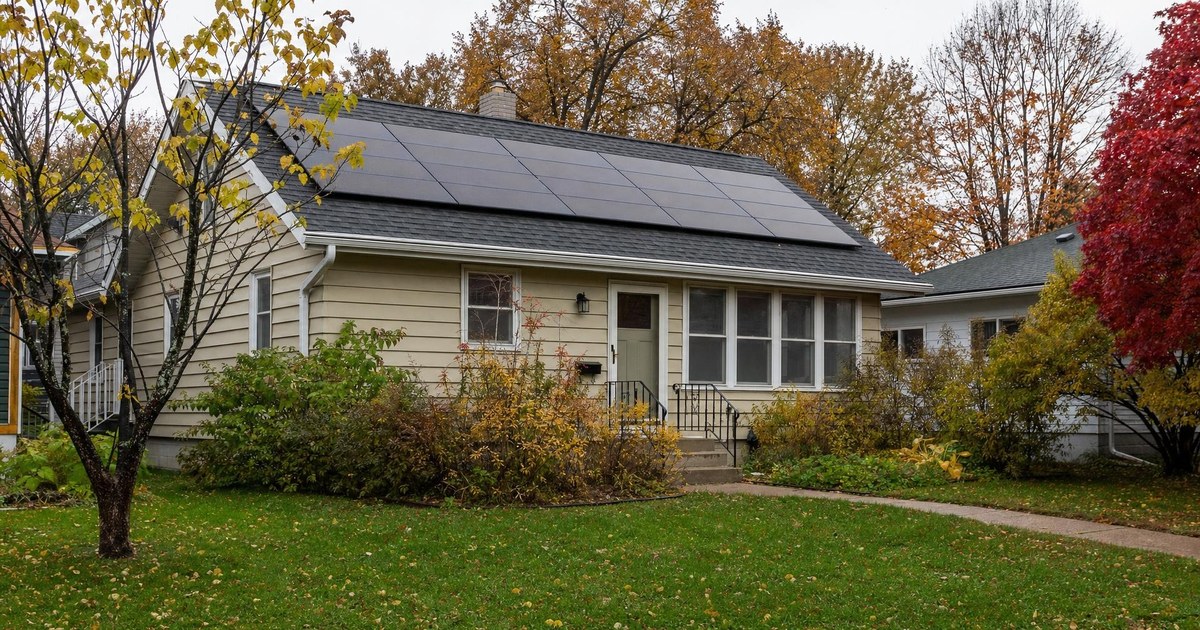
If a Minnesota solar proposal uses the phrase “Value of Solar,” ask what it means in that proposal. It might describe a general benefit, a particular regulatory calculation or a specific program rate. Those meanings are not interchangeable.
For a homeowner comparing projected savings with actual bills, the practical question is which approved compensation arrangement applies to the utility account. A rate borrowed from another solar program can produce a convincing spreadsheet without describing your situation.
Value of Solar is an alternative framework
Minnesota's statute allows a public utility to seek approval for a Value of Solar tariff. The Public Utilities Commission says no utility has voluntarily adopted that alternative and explains its use in Xcel's community-solar framework. That does not make it the default compensation method for an ordinary rooftop installation.
A community-solar subscription and a rooftop purchase need different financial reviews. In the first, examine the subscription charge and bill-credit terms. In the second, examine household consumption, production, the utility arrangement and the equipment or financing agreement. Do not insert a community-solar credit into a rooftop forecast merely because both involve solar generation.
System size and utility type matter
Under Minnesota Statutes section 216B.164, a qualifying facility below 40 kW AC may elect compensation for net input at the applicable average retail utility energy rate. The statute also treats cooperative and municipal arrangements differently in important respects. For example, qualifying small customers of those utilities can elect carried-forward kilowatt-hour credits that cancel at calendar-year end without additional compensation.
The PUC explains that the average retail utility energy rate depends on the utility and customer class and excludes fixed charges. It is not a single statewide cents-per-kWh promise.
Ask the utility to identify the system capacity used for classification and the payment option recorded on the account. A sales sheet showing panel capacity should not be treated as the final tariff determination.
A credit is not always available cash

Imagine two households with similar systems and annual production. One receives a dollar payment for qualifying excess under its arrangement. Another elects an energy-credit option with an expiration rule. Their production totals can look alike while the timing and usefulness of the benefits differ.
This illustration is not a claim that either option is universally better. It shows why the proposal must explain when value arrives, which charges it offsets and what happens to any unused balance. Ask for those answers before treating projected credits as money available for a monthly solar payment.
Review the assumptions that can drift
Request the tariff and rate calculation used in the original estimate. Note the effective date, customer class, compensation election and treatment of fixed charges. Then compare the bill's rate and credit lines with the model rather than dividing the whole bill by electricity usage and calling the result the export price.
The PUC identifies annual utility distributed-generation filings as a source of rates and contract information. A saved sales presentation may not reflect a later rate calculation.
Also examine the household assumptions. If occupancy or electricity use changed, document that separately from a tariff change. If production fell short, keep the monitoring record separate from the valuation question. Combining all three problems into “solar did not save enough” makes the next conversation harder.
Prepare for an informed contract review
Keep the proposal, agreement, compensation election, utility correspondence and a full set of relevant bills. Highlight any place where a Value of Solar figure was presented as the amount your rooftop system would receive. Ask the seller to identify the authority and account-specific basis for that number.
Solar Exit's billing review and document-review path can help organize the questions. A mismatched rate is a reason to investigate the promise and the result; it is not automatic proof of a contract remedy.
General consumer information, not legal, tax, mortgage or electrical advice. Eligibility, billing and remedies depend on the applicable facts and agreements.
Sources Reviewed
- Minnesota PUC special-rates guidanceReviewed October 15, 2026Reverified October 15, 2026. Current Revisor section 216B.164 labeled 2025, subdivisions 2a(c), 3 and 10; 2026 amendment table checked with no amendment to this section found. AC capacity, below-40-kW compensation and cooperative/municipal calendar-year credit option read directly. Current PUC special-rates guidance reports no voluntary VOS adoption and distinguishes Xcel community solar; PUC rates and contract guidance confirms class-specific energy rate excluding fixed charges and annual filings. No individual utility price certified.
- Section 216B.164, subdivisions 2a and 3Reviewed October 15, 2026Reverified October 15, 2026. Current Revisor section 216B.164 labeled 2025, subdivisions 2a(c), 3 and 10; 2026 amendment table checked with no amendment to this section found. AC capacity, below-40-kW compensation and cooperative/municipal calendar-year credit option read directly. Current PUC special-rates guidance reports no voluntary VOS adoption and distinguishes Xcel community solar; PUC rates and contract guidance confirms class-specific energy rate excluding fixed charges and annual filings. No individual utility price certified.
- PUC net-metering and compensation guidanceReviewed October 15, 2026Reverified October 15, 2026. Current Revisor section 216B.164 labeled 2025, subdivisions 2a(c), 3 and 10; 2026 amendment table checked with no amendment to this section found. AC capacity, below-40-kW compensation and cooperative/municipal calendar-year credit option read directly. Current PUC special-rates guidance reports no voluntary VOS adoption and distinguishes Xcel community solar; PUC rates and contract guidance confirms class-specific energy rate excluding fixed charges and annual filings. No individual utility price certified.
- PUC contracts and terms guidanceReviewed October 15, 2026Reverified October 15, 2026. Current Revisor section 216B.164 labeled 2025, subdivisions 2a(c), 3 and 10; 2026 amendment table checked with no amendment to this section found. AC capacity, below-40-kW compensation and cooperative/municipal calendar-year credit option read directly. Current PUC special-rates guidance reports no voluntary VOS adoption and distinguishes Xcel community solar; PUC rates and contract guidance confirms class-specific energy rate excluding fixed charges and annual filings. No individual utility price certified.
- Minnesota Revisor 2026 amendment tableReviewed October 15, 2026Reverified October 15, 2026. Current Revisor section 216B.164 labeled 2025, subdivisions 2a(c), 3 and 10; 2026 amendment table checked with no amendment to this section found. AC capacity, below-40-kW compensation and cooperative/municipal calendar-year credit option read directly. Current PUC special-rates guidance reports no voluntary VOS adoption and distinguishes Xcel community solar; PUC rates and contract guidance confirms class-specific energy rate excluding fixed charges and annual filings. No individual utility price certified.